
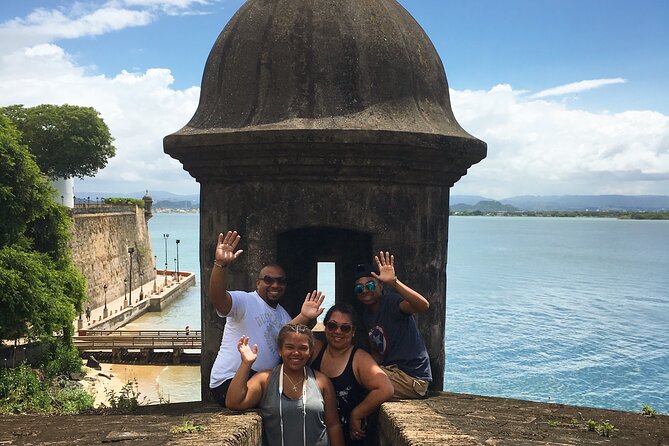
REVIEW · OLD SAN JUAN TOURS
Old San Juan Tour in Spanish
Old San Juan comes alive in Spanish. This small-group walk is the one option built specifically for Spanish speakers, with a 12:30 pm start and a guide, Daniel Rivera Viruet, who keeps the pace friendly and the stories clear. You’ll move through cobblestone streets, colorful facades, and key landmarks tied to how the Spanish built, defended, and shaped the oldest part of San Juan.
I especially like two things. First, Daniel’s energy, he checks in with the group and stays attentive, pausing for questions instead of rushing you past the good stuff. Second, the tour is designed around real spaces, churches, plazas, fort walls, and street corners, with thoughtful rules about where they can enter and where you view from outside.
One consideration: this is a walking tour with moderate physical fitness expectations, and it focuses on the sights you see from the street. You do not enter the big castles or the house stop, and church entry only happens if the space is empty or has few people, since they do not interrupt worshippers.
In This Review
- Key highlights to know before you go
- Spanish-only Old San Juan at 12:30 pm, why it feels more local
- Price and what you get for $30
- Starting at 407 C. de San Francisco, the walk that actually makes sense
- Stop-by-stop in Old San Juan, from Plaza Colón to the finish near Fortaleza Street
- Plaza Colón: why the Spanish built a walled city in the 1500s
- Parroquia San Francisco de Asis (founded 1756): church history with quiet rules
- Castillo de San Cristóbal: the largest defensive castle viewpoint
- Calle San Sebastián: cobblestones plus the festival connection
- La Puerta de la Bandera: learn the flag story, then grab photos
- Iglesia de San Jose (1532): another church stop with selective entry
- Old cemetery by the beach near Castillo del Morro: a quieter, reflective moment
- Cuartel de Ballaja: where Spanish soldiers lived
- Castillo San Felipe del Morro: history from the outside, with a follow-up option
- Plaza del Quinto Centenario (1992): 500 years, plus a hidden detail
- Door of San Juan Bautista: one of the main gates of the walled city
- La Rogativa viewpoint: bay views and a glimpse of Juan Ponce de León’s house
- House of Juan Ponce de León (1521): learn it now, visit later if you want
- Oldest church in Puerto Rico (1521): more structure, more story
- Calle de la Fortaleza: the main street where you continue on your own
- Capilla del Santo Cristo de la Salud: end point with an easy transition to lunch
- Who this tour is best for, and who might want a different one
- How to get the most out of it (without overthinking)
- Should you book this Spanish Old San Juan tour?
- FAQ
- Is there a Spanish version of the Old San Juan tour?
- How long is the tour?
- What is the price?
- Do we enter the castles or Juan Ponce de León’s house during the tour?
- Are we allowed inside the churches?
- Is the tour good for people who can walk a bit?
- What happens if weather is bad?
Key highlights to know before you go
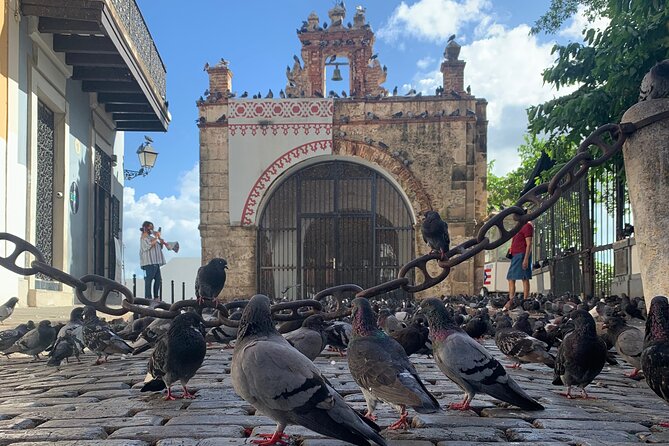
- Spanish-only experience at 12:30 pm, with English tours handled separately
- Daniel Rivera Viruet as the guide, known for staying calm, organized, and responsive
- You see the forts without entering, plus photo chances at flag and gate spots
- Church entry is selective, based on whether it is empty or lightly occupied
- Small group size (up to 20) for a more personal pace
Other ways to spend a day inside the old walls, reviewed
- Old San Juan Walking Tour★ 5.0 · 2,211 reviews
- Old San Juan City Walking Tour★ 5.0 · 1,718 reviews
- Historic Old San Juan Sunset Walking Tour★ 5.0 · 634 reviews
- Old San Juan: Segway PT and Segway Xafari Ebike Tours★ 4.5 · 634 reviews
Spanish-only Old San Juan at 12:30 pm, why it feels more local
If you want Old San Juan with the language turned on, this is your ticket. The big advantage is simple: the tour is offered only in Spanish at 12:30 pm, and you do not have to “make it work” with a patchy mix of languages. You’ll be following stories about the city’s Spanish roots, legends, and details from the moment you meet up near Plaza Colón.
I also like that the guide keeps the focus on understanding, not just pointing. In practice, that means frequent context, why certain places matter, and where you should look, like the street layout and the defensive logic behind the walls.
If you are choosing between languages, double-check before you book. The note here is important: English usually starts at 9:30 am, and English availability is not automatic, you have to message first to confirm.
Price and what you get for $30
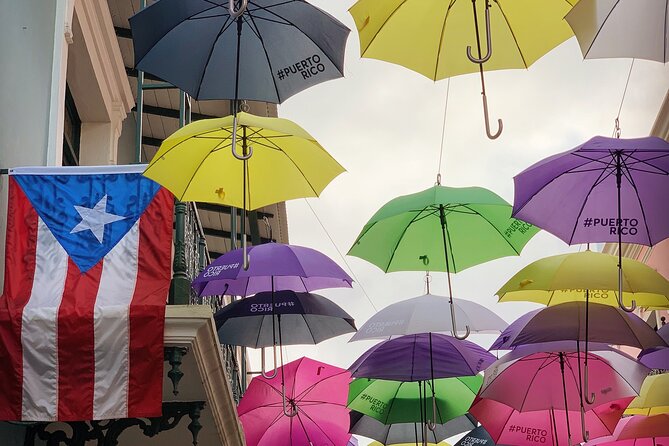
The cost is $30.00 per person for about 2 hours. That price is unusually fair for Old San Juan, because you get guided walking time that connects multiple stops into one story, from early Spanish planning to later celebrations in the 1990s.
Also, pay attention to what is and is not included when you see the big sites. Church stops are listed as free where the tour can enter, but the largest castle and Morro area fort are viewed without entry during the walk. If you want to go inside those forts, you can do it after the tour when you are ready to pay an entrance fee on your own.
That structure is, in my opinion, part of the value. You get the overview now, you choose the deeper ticket later, and you do not waste your tour time hunting for lines, tickets, or scrambling to fit everything in.
Starting at 407 C. de San Francisco, the walk that actually makes sense
You meet at 407 C. de San Francisco, San Juan, 00901, Puerto Rico. The meeting point matters because Old San Juan streets can feel like a maze when you are on your own. Starting here helps you orient fast, then the tour builds outward toward forts, gates, plazas, and viewpoints.
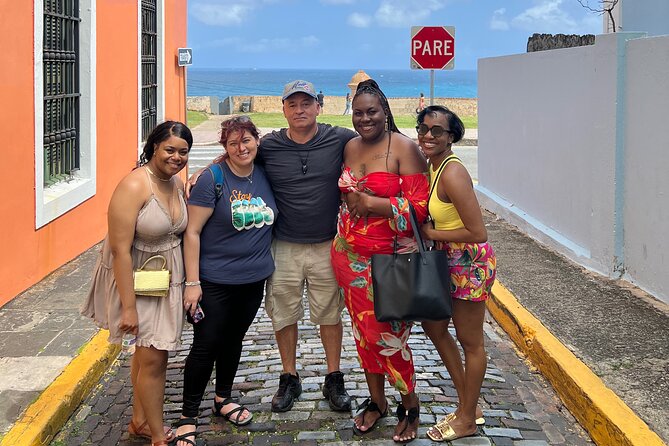
The route stays manageable for a 2-hour format. You’ll have several short stops, with enough time to look, take a few photos, and ask questions before moving on. And because the group caps at 20, it does not turn into a wall of people passing the guide like a conveyor belt.
One practical point: this tour is weather-dependent. If it is canceled due to poor weather, you will get offered a different date or a full refund.
Stop-by-stop in Old San Juan, from Plaza Colón to the finish near Fortaleza Street
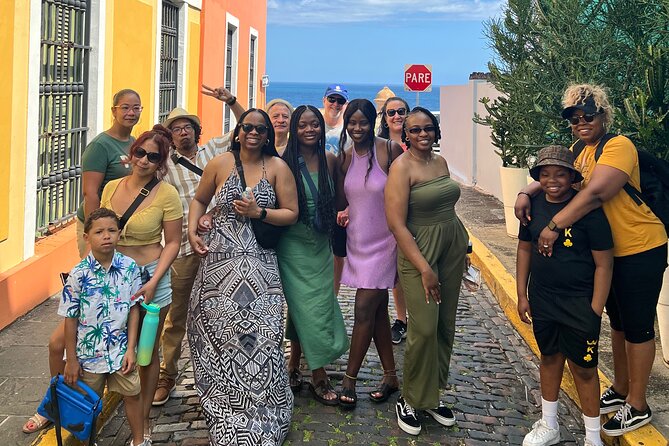


Plaza Colón: why the Spanish built a walled city in the 1500s
Your tour begins at Plaza Colón, where you get a brief introduction right away. This is where you learn the reason the Spanish built a walled city in the 1500s, and it sets up everything that comes after.
Once you understand the “why,” the walls and gate locations stop feeling random. Suddenly, you are looking at Old San Juan like a defensive map, not just a pretty neighborhood with great photo angles.
Parroquia San Francisco de Asis (founded 1756): church history with quiet rules
Next comes Parroquia San Francisco de Asis, founded in 1756. The guide explains its history and adds details you can actually use to appreciate the building, instead of just reading signs from the sidewalk.
They only enter if the church is empty or has few people, and they do not interrupt prayers. So if it is busy, you may get exterior viewing and explanation rather than time inside.
Castillo de San Cristóbal: the largest defensive castle viewpoint
You’ll head toward Castillo de San Cristóbal, described as the largest castle built in America to defend the city. The tour gives the history, but there is no entry during this walk.
That said, it still works well. You get the meaning and context now, and you can choose to pay later to see the inside at your own pace.
Calle San Sebastián: cobblestones plus the festival connection
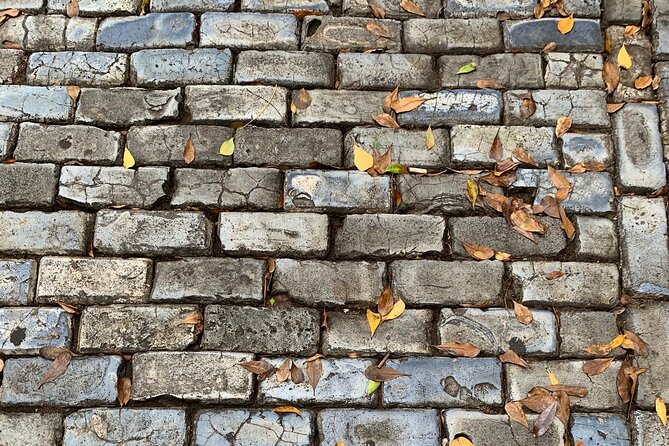
Calle San Sebastián is where the tour leans into street-level atmosphere. You’ll walk cobblestone lanes with colorful buildings, then connect the street to Puerto Rico’s largest festival, celebrated in January.
This stop is short, but it helps you feel the rhythm of Old San Juan, because you are not just staring at monuments. You are experiencing the streets the way they are lived in.
La Puerta de la Bandera: learn the flag story, then grab photos
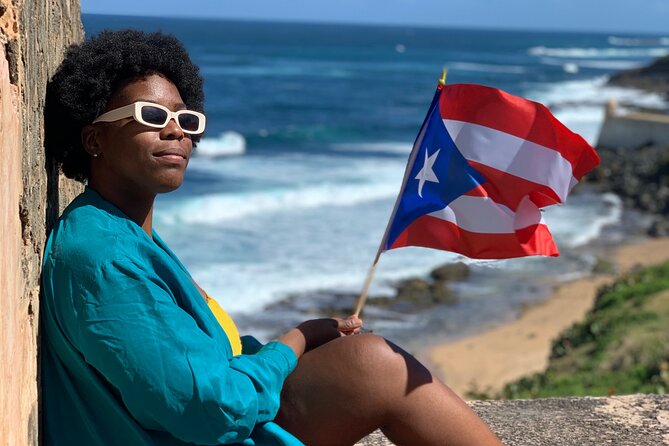
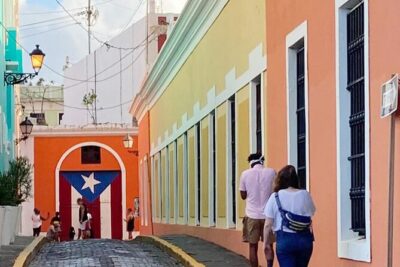
At La Puerta de la Bandera, the guide explains the flag of Puerto Rico and how it has changed over time. If photos are part of your plan, this is one of those easy stops where you can take pictures right at the spot.
It is also a smart break in the walk, because it shifts the theme from forts and defense to identity and symbolism.
Iglesia de San Jose (1532): another church stop with selective entry
The next stop is Iglesia de San Jose, founded in 1532, described as the second oldest church in Puerto Rico. Expect history and interesting details, plus the same respectful entry rule.
If it is empty or lightly occupied, you may enter. If not, the guide will still keep you moving with explanation, without turning the church visit into a disruption.
Old cemetery by the beach near Castillo del Morro: a quieter, reflective moment
You’ll visit an old cemetery located on the edge of the beach and near Castillo del Morro. This is one of the stops that changes the mood, shifting the focus from architecture and celebrations to memory and place.
Because cemeteries tend to demand a quieter pace, it is also a good moment to slow down, look around, and let the bigger fort area make more sense.
Cuartel de Ballaja: where Spanish soldiers lived
Then you reach Cuartel de Ballaja, the place where Spanish soldiers lived. This stop turns the city from stones and walls into people and daily life, and it adds a practical understanding of how long-term defense worked.
If a bathroom stop is available, this is the kind of place where it can be offered. The stop is listed as about 10 minutes, so it gives you a needed reset without dragging the group.
Castillo San Felipe del Morro: history from the outside, with a follow-up option
You’ll get to Castillo San Felipe del Morro, built in 1539 to defend the entrance to the bay. Again, the tour does not enter the castle during the walk, but you learn the history and why this point mattered so much.
If you want more, you can visit it after the tour. That setup is handy, because you can decide based on your energy level and how much time you still have in San Juan.
Plaza del Quinto Centenario (1992): 500 years, plus a hidden detail
At Plaza del Quinto Centenario, the guide talks about the plaza built in 1992 celebrating the 500 years of the discovery of America. This is also where you’ll learn about details the plaza holds, including the Telluric Totem made by artist Jaime Suarez.
Even if you do not know the story ahead of time, this stop gives you a clear, modern marker in the middle of centuries-old architecture. It also adds variety without breaking the walking flow.
Door of San Juan Bautista: one of the main gates of the walled city
Next is the door of San Juan Bautista, described as one of the main gates of the walled city. The guide explains the history and points out interesting details, which makes it easier to understand why certain gates were where they were.
This is a small stop, but it is exactly the kind of detail that makes a walking tour valuable. You start noticing the defensive logic behind every corner.
La Rogativa viewpoint: bay views and a glimpse of Juan Ponce de León’s house
You’ll move to La Rogativa for a walk with a view of the San Juan Bay. From here, you can see part of Juan Ponce de León’s house, and the guide explains the Rogation.
It’s one of those stops that feels like a “breather” even though you are still walking. The bay view helps your brain reset, then you can keep absorbing the story without getting overloaded.
House of Juan Ponce de León (1521): learn it now, visit later if you want
Then you reach the House of Juan Ponce de León, dating to 1521. The guide provides history, but you do not enter the house during the tour, and the same entrance fee logic applies if you want to go inside later.
I like having this as an optional next step. You can keep your tour time focused, then decide later whether you want the extra hours and cost.
Oldest church in Puerto Rico (1521): more structure, more story
You’ll also stop at the oldest church in Puerto Rico, founded in 1521. Expect history and details, with entry only if it is empty or has few people, so the guide can keep things respectful.
This is a good reminder that the tour is not trying to “check boxes” by force. It is built around appropriate behavior in sacred spaces, which makes the experience calmer for everyone.
Calle de la Fortaleza: the main street where you continue on your own
Finish the sightseeing segment at Calle de la Fortaleza, the main street of Old San Juan. Here the guide ties the location to what you can do next: shops, restaurants, crafts, and galleries.
Even though your tour has an end, this part is useful because it helps you plan the next hour. You’ll have a clear main street to aim for, so lunch is easier to find.
Capilla del Santo Cristo de la Salud: end point with an easy transition to lunch
Your tour ends at Capilla del Santo Cristo de la Salud. The guide wraps up from here, and you can continue walking along Fortaleza Street for lunch or browsing shops.
At this point, you are not exhausted in a tired way. You’re usually ready to eat, shop a little, and keep exploring with a better sense of direction.
Who this tour is best for, and who might want a different one

This tour is ideal if you:
- want Old San Juan explained in Spanish
- like a structured walk with short stops instead of long museums
- appreciate history told through real places, not just facts thrown at you
- prefer a small-group pace (up to 20)
It may be less ideal if you:
- need a lot of indoor time, because castles and houses are not entered
- want a long deep museum-style experience, because this is about a 2-hour overview
- are not comfortable walking on cobblestones, since the route includes street walking and viewpoints
Also, if you do not speak Spanish, you’ll need to message ahead to check English availability, since English does not automatically line up with the Spanish slot.
How to get the most out of it (without overthinking)
A few simple moves can make this tour better:
- Wear shoes you trust on cobblestones. This is Old San Juan, not a flat mall walkway.
- Bring a light layer. You are outside for the full walk, and weather can shift quickly.
- Save your big-ticket site plan for after. The castle stops are designed for viewing and context first, then optional entry later.
And if you’re the type who asks questions, this tour rewards you. Daniel’s approach, as described, includes pausing for questions and making sure the group stays comfortable.
Should you book this Spanish Old San Juan tour?
Book it if Spanish is your preference and you want a guided, small-group way to understand Old San Juan in a couple hours. The $30 price makes sense because you are buying context across many key locations, plus a guide who is known for being attentive and easy to follow in Spanish.
Skip it or choose another option if you want lots of interior time, or if you need a non-walking, sit-and-stare plan. Also, if you are unsure about language availability, confirm the exact time and language before you pay so you end up on the right tour.
If your goal is to leave Old San Juan with stories you can repeat, a better sense of where the walls and gates fit, and a route you can keep using after the tour, this one is a smart bet.
FAQ
Is there a Spanish version of the Old San Juan tour?
Yes. The tour at 12:30 pm is in Spanish. English is typically offered at 9:30 am, but availability must be checked by message.
How long is the tour?
It runs for about 2 hours.
What is the price?
The price is $30.00 per person.
Do we enter the castles or Juan Ponce de León’s house during the tour?
No. The tour does not enter the castle stops or the house stop, but you can visit them after the tour if you want, since entrance fees apply.
Are we allowed inside the churches?
You only enter if the church is empty or has few people, and the guide will not interrupt people who are praying.
Is the tour good for people who can walk a bit?
You should have a moderate physical fitness level. It is a walking tour with multiple stops.
What happens if weather is bad?
This experience requires good weather. If it is canceled due to poor weather, you will be offered a different date or a full refund.
More Puerto Rico Bookings




Everything Else We Reviewed in Puerto Rico
Old San Juan, A Few More Ways


Newest Puerto Rico Reviews
- Authentic San Juan Guided Walking Food Tour with Pina Colada
★ 5.0 · 3 reviews - Tropical Rainforest Wonders Full Day Experience from San Juan
★ 5.0 · 3 reviews - Transport from Airport Luis Muñoz Marín to Ferry Ceiba
★ 5.0 · 3 reviews - Boogie Board with Snacks and Drinks in San Juan
★ 3.5 · 3 reviews - Professional Photoshoot in the Vibrant Streets of Old San Juan
★ 5.0 · 3 reviews
Old San Juan Tours, compared.
 ★ 5.0Old San Juan Walking TourFrom $392,211 reviews
 ★ 5.0Old San Juan City Walking TourFrom $391,718 reviews
 ★ 4.7San Juan: Old Town Sunset Walking TourFrom $39636 reviews
 ★ 4.5Old San Juan: Segway PT and Segway Xafari Ebike ToursFrom $108634 reviews
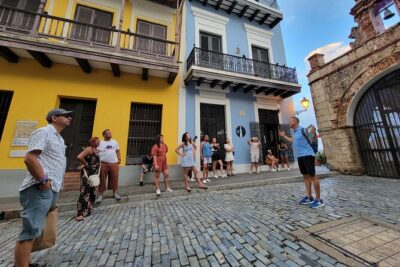 ★ 5.0Historic Old San Juan Sunset Walking TourFrom $39634 reviews
 ★ 4.5Old San Juan Bar Crawl: Experience Local HotspotsFrom $65574 reviews
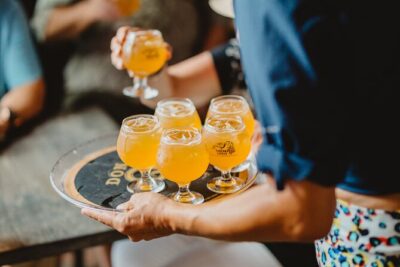 ★ 5.0Savor the Sunset: Old San Juan Walking Food TourFrom $179559 reviews
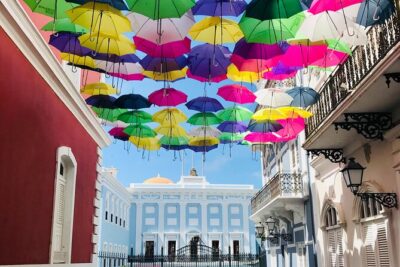 ★ 5.0Old San Juan and El Morro Castle Walking TourFrom $54480 reviews
Browse the lists this tour appears in