
REVIEW · OLD SAN JUAN TOURS
Old San Juan Walking Day and Night Tours
Old San Juan snaps into focus quickly. This 3-hour walking tour gives you the big-picture story of the walled city, with photo stops and water breaks that keep things comfortable. I especially like the way the guide turns stone streets into real moments you can picture.
Two things I’d point to right away: the small group of up to 10 makes it easy to hear, and the storytelling has real energy when the guide calls out details along the way. One consideration, though: some major sights along the route, like the cathedral, can have limited open times, so you might see it from the outside depending on the day.
In This Review
- Key highlights you should know upfront
- Why this Old San Juan walking tour works so well
- Meeting at Plaza Colón, then letting the “walled city” unfold
- The stop-by-stop route: what each place adds to the story
- Plaza Colón: Columbus, voyages, and the big starting point
- El Castillo San Cristóbal area: Spanish defense on purpose
- Plaza de la Barandilla: a plaza defined by its handrail
- Plaza de Armas: the civic heart with military roots
- Iglesia de San Jose: Spanish Gothic in use
- Plaza del Quinto Centenario: the 1992 anniversary chapter
- Cuartel de Ballaja: barracks, families, and the scale of occupation
- La Rogativa: a commemorative sculpture with an international connection
- La Puerta de San Juan: an entrance for weary sailors
- La Fortaleza, Palacio de Santa Catalina: first fortification, no palace visit
- Catedral Basilica Menor de San Juan Bautista: art, relics, and sometimes limited access
- Paseo de la Princesa: the promenade that feels like a finishing line
- Value and pacing: what $85.99 buys you in real terms
- The guide factor: storytelling that actually keeps up
- Photos, water breaks, and how to move comfortably
- What to plan for your cathedral visit and your expectations
- Who should book this tour
- Should you book Old San Juan Walking Day and Night Tours?
- FAQ
- How long is the Old San Juan walking tour?
- Where does the tour start and end?
- How many people are in the group?
- Is bottled water included?
- Are admission tickets included for the stops?
- Do you go inside La Fortaleza, Palacio de Santa Catalina?
- Is the Cathedral Basilica Menor de San Juan Bautista included every day?
- Are service animals allowed?
- Is the tour near public transportation?
- Is free cancellation available?
Key highlights you should know upfront
- Up to 10 people means you are not getting lost in a crowd.
- Bottled water and planned breaks help during the steady walking.
- 500 years of history and culture gets woven through plazas, churches, and fortifications.
- Most stops are free, but La Fortaleza is not included inside, and cathedral access depends on open times.
- Guides named Andreas, Roberto, and Nahomi come through strong, with fast answers and lively storytelling.
Other ways to spend a day inside the old walls, reviewed
- Old San Juan Walking Tour★ 5.0 · 2,211 reviews
- Old San Juan City Walking Tour★ 5.0 · 1,718 reviews
- Historic Old San Juan Sunset Walking Tour★ 5.0 · 634 reviews
- Old San Juan: Segway PT and Segway Xafari Ebike Tours★ 4.5 · 634 reviews
Why this Old San Juan walking tour works so well
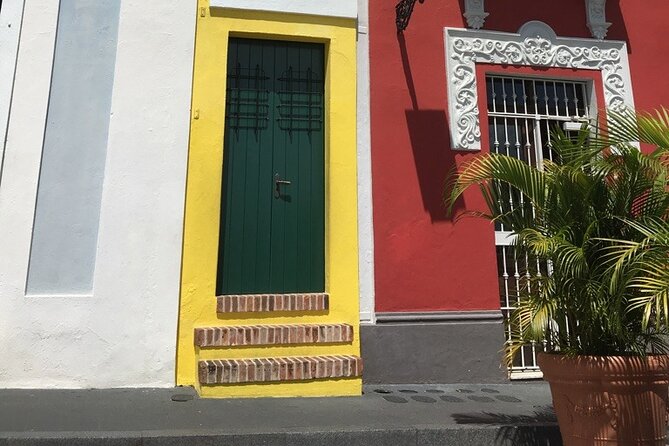
Old San Juan can feel like a postcard that you step into, then suddenly you realize you do not just want pretty buildings, you want context. This tour gives you that context fast. In about 3 hours of walking time between stops, you get a connected story that starts in the earliest layers of the settlement and moves toward the later chapters of the city you are walking through.
The pacing is built for attention. You are not sprinting from one photo spot to the next. You get short time windows at each stop, plus breaks for water and shade when the route allows. That balance matters in Old San Juan because the streets can be uneven, and the sun can be relentless even when the scenery looks gentle.
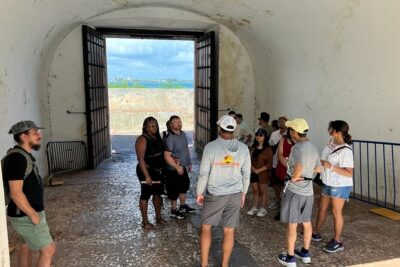
And the format fits the kind of traveler who likes to ask questions. The small group size means you can actually hear the guide and respond, instead of just nodding along with the same crowd noise.
Meeting at Plaza Colón, then letting the “walled city” unfold
You start at Plaza Colón in San Juan’s Old San Juan area, a logical jumping-off point because it anchors the tour’s timeline. This plaza is dedicated to the Genovese colonizer, and the main structure includes reliefs connected to Columbus’s voyages, plus a Columbus statue. It is also the place where your guide gathers you and sets the tone, so you can connect what you will see next to the story being told.
From there, you move through a chain of plazas and landmarks that each represent a different kind of Old San Juan power: exploration, defense, religion, and civic life. The route is designed so each stop feels like a chapter, not a random list of sights.
You finish at Paseo de la Princesa, and that matters if you are trying to plan the rest of your day. You end near famous tourism offices and within an easy walk of the taxi line serving the cruise ports, which is handy if you are combining this with other Old San Juan exploring.
The stop-by-stop route: what each place adds to the story
This is not just a highlight reel. Each stop is placed to help you understand how the city was shaped. Below is what you can expect at every main point, plus how to think about it as you go.
Plaza Colón: Columbus, voyages, and the big starting point
You will spend about 15 minutes here. The plaza’s Columbus connection is not subtle, with the reliefs showing the first and second voyages and the statue standing as the focal marker. I like this stop because it gives you the starting frame, then the guide can explain why the rest of Old San Juan grew the way it did.
Practical note: it is a meeting spot, so you might do a bit of regrouping before the walking gets going.
More Puerto Rico done at walking pace
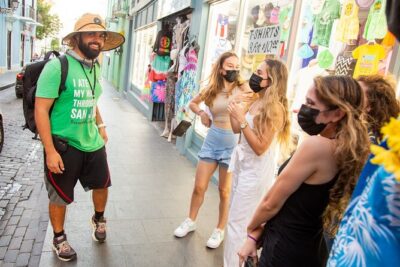
El Castillo San Cristóbal area: Spanish defense on purpose
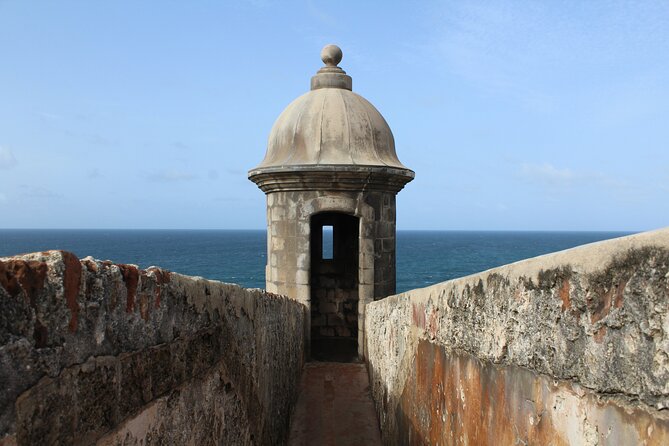
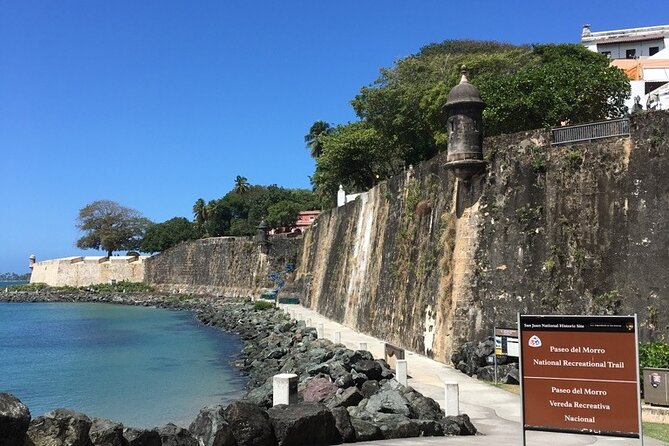
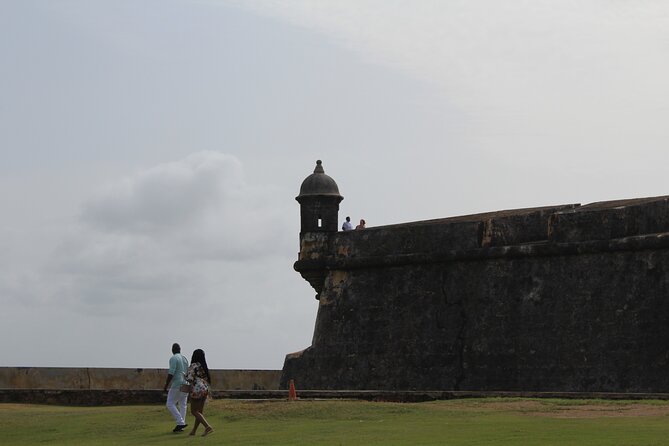
Right after Plaza Colón, you head into the fortification theme, including El Castillo San Cristóbal. This defense system was built to protect the islet by land and, even reduced from its original scale, it remains one of the biggest Spanish Crown fortifications in the Americas.
The value here is perspective. Even if you have seen forts before, this one helps you understand why Old San Juan looks the way it does, with heavy emphasis on walls, strategic entrances, and military planning. You are not just viewing a structure, you are learning what it was built to prevent.
Plaza de la Barandilla: a plaza defined by its handrail
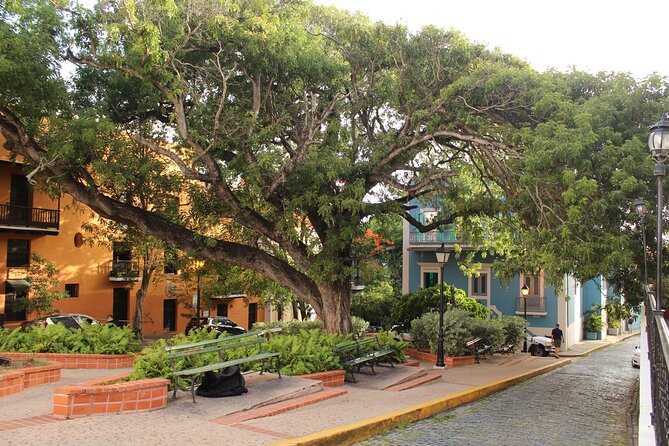
Next comes Plaza de la Barandilla, usually a shorter stop at about 10 minutes. It is the one plaza in Old San Juan not named for a historical or religious figure. Instead, its identity comes from the characteristic handrail that connects Calle San Francisco with Calle Luna.
This stop is a good breather. It is also a reminder that the city is not only about empires. It is also about everyday street design and those small details that locals use without thinking twice.
Plaza de Armas: the civic heart with military roots
About 15 minutes at Plaza de Armas. This is the first plaza where military drills were conducted since early settlements in the 16th century. Along with that, you will see civic power in the area, including the Town Hall and the old Royal Audience of the Spanish Crown.
If you like when a city’s “why” becomes clear, this is one of those stops. It is where you can see the overlap between everyday governance and military readiness.
Iglesia de San Jose: Spanish Gothic in use
You then move to Iglesia de San Jose, built in 1523 and described as the second oldest church in the New World still in use. The architecture includes Spanish Gothic features, and nearby you can see a statue of Juan Ponce de León, the conquistador and first governor of Puerto Rico.
Two reasons this stop is worth your time: first, it keeps the story grounded in people and belief, not just stone and politics. Second, the nearby figure helps connect the religious site to the era of conquest and governance your guide has been building toward.
Plaza del Quinto Centenario: the 1992 anniversary chapter
Next is Plaza del Quinto Centenario, built in 1992 to celebrate the 500th anniversary of the founding of Old San Juan. You will spot symbolic elements and an emblematic Totem tied to that anniversary.
This is a reminder that history is not trapped in the past. A city keeps telling its origin story, even in modern times, and this plaza is one of the visible places where that happens.
Cuartel de Ballaja: barracks, families, and the scale of occupation
At Cuartel de Ballaja, you get about 15 minutes. These barracks were constructed by the Spanish Crown in 1864 and were able to house over a thousand officers, soldiers, and even their families.
That detail changes how you picture a fort. It is not only soldiers passing through. It includes communities. When you think of Old San Juan, this kind of information helps you move beyond the idea of a museum city and toward a lived city.
La Rogativa: a commemorative sculpture with an international connection
Then comes La Rogativa, a sculpture made by Lindsay Dean, a sculptor from New Zealand who lived on the island. It commemorates the 450th anniversary of Old San Juan’s founding, and it also remembers the British attack of 1797.
This is an interesting stop because it connects Puerto Rico’s local story with an artist who was not from the island. It helps you see how history gets remembered through art, not just through buildings.
La Puerta de San Juan: an entrance for weary sailors
About 10 minutes at La Puerta de San Juan. This is described as the last door left standing, and it historically granted entrance to sailors coming from the old port directly to the cathedral area.
I like thinking about this kind of site because it makes the city practical. You are not just seeing where power was. You are seeing where people entered, and what route they likely followed once they stepped into the walled area.
La Fortaleza, Palacio de Santa Catalina: first fortification, no palace visit
You will reach La Fortaleza, Palacio de Santa Catalina, described as the very first fortification on the islet. The tour notes that La Fortaleza served to protect the initial settlement, first from attacks tied to the Tainos, then from later foreign powers. Importantly, you do not go in to the palace.
So treat this as an exterior history stop, not a museum stop. The payoff is the strategic viewpoint: you can trace how defense evolves as the city grows and changes.
Catedral Basilica Menor de San Juan Bautista: art, relics, and sometimes limited access
Next is Catedral Basilica Menor de San Juan Bautista, built in 1529. This cathedral houses frescoes, stained glass, religious relics, and it is noted as the final resting place for some prominent figures from the city. The catch: it is open only on certain occasions, days, and times.
So your experience here might be a quick look around the cathedral area, and on the right timing, more. Plan to let your guide handle the situation in the moment, rather than expecting a guaranteed inside visit.
Paseo de la Princesa: the promenade that feels like a finishing line
You wrap up at Paseo de la Princesa, a 19th-century promenade named after La Princesa de Asturias. The tour describes it as preserved and still in use today, which makes it a nice ending because you get a more relaxed, public-space feel after the dense history stops.
This is also a sensible place to regroup, grab a snack, and plan the next part of your Old San Juan day.
Value and pacing: what $85.99 buys you in real terms
At $85.99 per person, you are paying for three things that matter in Old San Juan: a guide who can connect details across 500 years, a small group capped at 10, and a route designed around short stays plus breaks.
It helps that many stops have admission ticket free noted in the route, so you are not stacking extra entry costs on top of the tour price. Two exceptions are explicitly called out: La Fortaleza is not included inside, and the cathedral’s inside access depends on whether it is open during the times you are there.
The 3-hour length also supports good value. This is long enough to get the city’s structure into your head, but short enough that you can still explore on your own afterward. If you are the type who tends to wander off, this tour gives you a map in your mind first.
Also, this tour has an average booking window of about 23 days in advance, which suggests it’s a popular way to start an Old San Juan trip. If your dates are fixed, booking ahead is smart.
The guide factor: storytelling that actually keeps up
The strongest praise in what you get from this tour is the guide’s ability to make history feel immediate, not recited. Guides named Andreas, Roberto, and Nahomi are highlighted for their knowledge and storytelling style, and the common thread is that they answer questions and encourage you to keep asking.
That matters because Old San Juan has layers that overlap. You might wonder why a plaza is named a certain way, why a fort looks the way it does, or how different eras left visible marks. A good guide is the difference between collecting facts and understanding patterns. This tour is built to do the second.
Photos, water breaks, and how to move comfortably
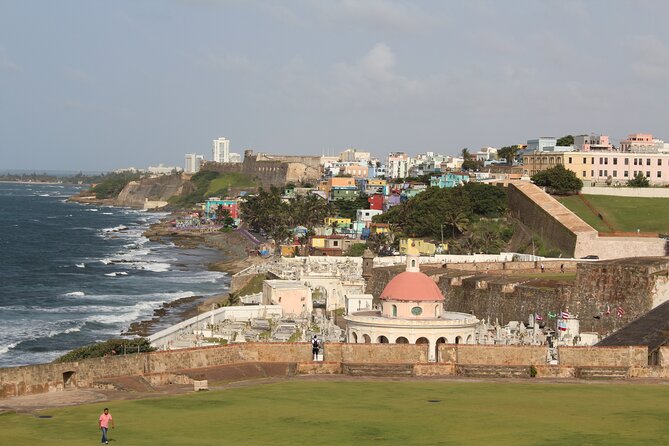
You should expect photo opportunities at key points, plus water breaks along the way. That sounds simple, but it changes the whole vibe of a walking tour. You can stop when the light hits the walls, not just when the schedule forces it.
The route is also designed for a manageable walking load, described as about 3 hours including walking between attraction points. In practice, that means you should treat it like a steady stroll with stops, not a quick museum hop.
What to plan for your cathedral visit and your expectations
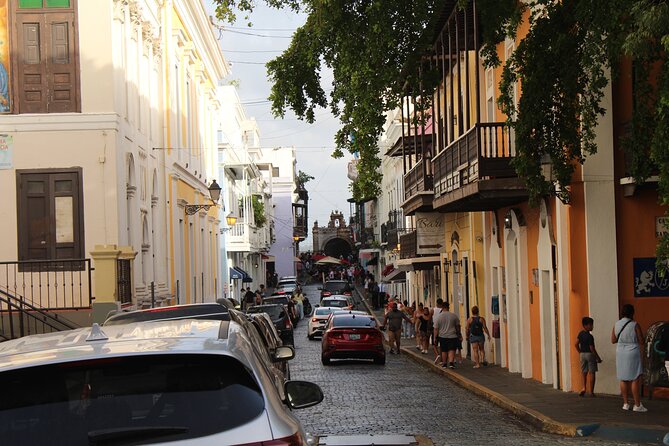
The cathedral is a wildcard in the best possible way, because it keeps the tour realistic. Since Catedral Basilica Menor de San Juan Bautista is open only on certain occasions, days, and times, you cannot count on guaranteed inside access.
I’d recommend you go with flexibility. If the cathedral is open, great. If it is not, you still get the route logic and the historical context that explains why this cathedral matters in Old San Juan’s timeline.
La Fortaleza is more predictable in a different way. You will learn about it, but you do not go in. So if you want palace interiors, you will need a separate plan later.
Who should book this tour
This tour fits you if:
- You want a clear 500-year story of Old San Juan, not just photos.
- You like asking questions and getting direct answers from the guide.
- You prefer a small group where your ears work and your questions do not get lost.
- You are starting a trip in Old San Juan and want orientation fast.
It might not fit you as well if you only want one kind of experience, like pure beach time or a fully ticketed museum day. This is about walking, plazas, architecture, and the context behind them.
Should you book Old San Juan Walking Day and Night Tours?
Yes, if you want the city to click. I like this as a start because it gives you a framework: Columbus era beginnings, Spanish defense logic, civic power, and the religious center that anchors the walled city.
Book it especially if:
- You value small group conversations over a big-van experience.
- You want a guide who can keep the story flowing from place to place.
- You appreciate routes that mix major landmarks with the smaller details that explain why the streets feel the way they do.
If you are hoping for guaranteed cathedral interior time, keep your expectations flexible. But for overall value, pacing, and storytelling quality, this is one of the cleaner ways to learn Old San Juan without wasting a day guessing what you are seeing.
FAQ
How long is the Old San Juan walking tour?
The tour takes about 3 hours total, including walking time between attraction points.
Where does the tour start and end?
It starts at Plaza Colón in San Juan (00916) and ends at Paseo de la Princesa in San Juan (00901).
How many people are in the group?
The tour has a maximum of 10 travelers.
Is bottled water included?
Yes, bottled water is included.
Are admission tickets included for the stops?
Many stops are marked as admission free. La Fortaleza is noted as admission ticket not included, and the cathedral can have limited open hours.
Do you go inside La Fortaleza, Palacio de Santa Catalina?
No. The tour notes that you do not go in to the palace.
Is the Cathedral Basilica Menor de San Juan Bautista included every day?
Access to the cathedral is described as open only on certain occasions, days, and times, so it may depend on when you join the tour.
Are service animals allowed?
Yes, service animals are allowed.
Is the tour near public transportation?
Yes, it is near public transportation.
Is free cancellation available?
Free cancellation is available, and you can cancel up to 24 hours in advance for a full refund.
More Puerto Rico Bookings




Everything Else We Reviewed in Puerto Rico
Old San Juan, A Few More Ways


Newest Puerto Rico Reviews
- Authentic San Juan Guided Walking Food Tour with Pina Colada
★ 5.0 · 3 reviews - Tropical Rainforest Wonders Full Day Experience from San Juan
★ 5.0 · 3 reviews - Transport from Airport Luis Muñoz Marín to Ferry Ceiba
★ 5.0 · 3 reviews - Boogie Board with Snacks and Drinks in San Juan
★ 3.5 · 3 reviews - Professional Photoshoot in the Vibrant Streets of Old San Juan
★ 5.0 · 3 reviews
Old San Juan Tours, compared.
 ★ 5.0Old San Juan Walking TourFrom $392,211 reviews
 ★ 5.0Old San Juan City Walking TourFrom $391,718 reviews
 ★ 4.7San Juan: Old Town Sunset Walking TourFrom $39636 reviews
 ★ 4.5Old San Juan: Segway PT and Segway Xafari Ebike ToursFrom $108634 reviews
 ★ 5.0Historic Old San Juan Sunset Walking TourFrom $39634 reviews
 ★ 4.5Old San Juan Bar Crawl: Experience Local HotspotsFrom $65574 reviews
 ★ 5.0Savor the Sunset: Old San Juan Walking Food TourFrom $179559 reviews
 ★ 5.0Old San Juan and El Morro Castle Walking TourFrom $54480 reviews
Browse the lists this tour appears in